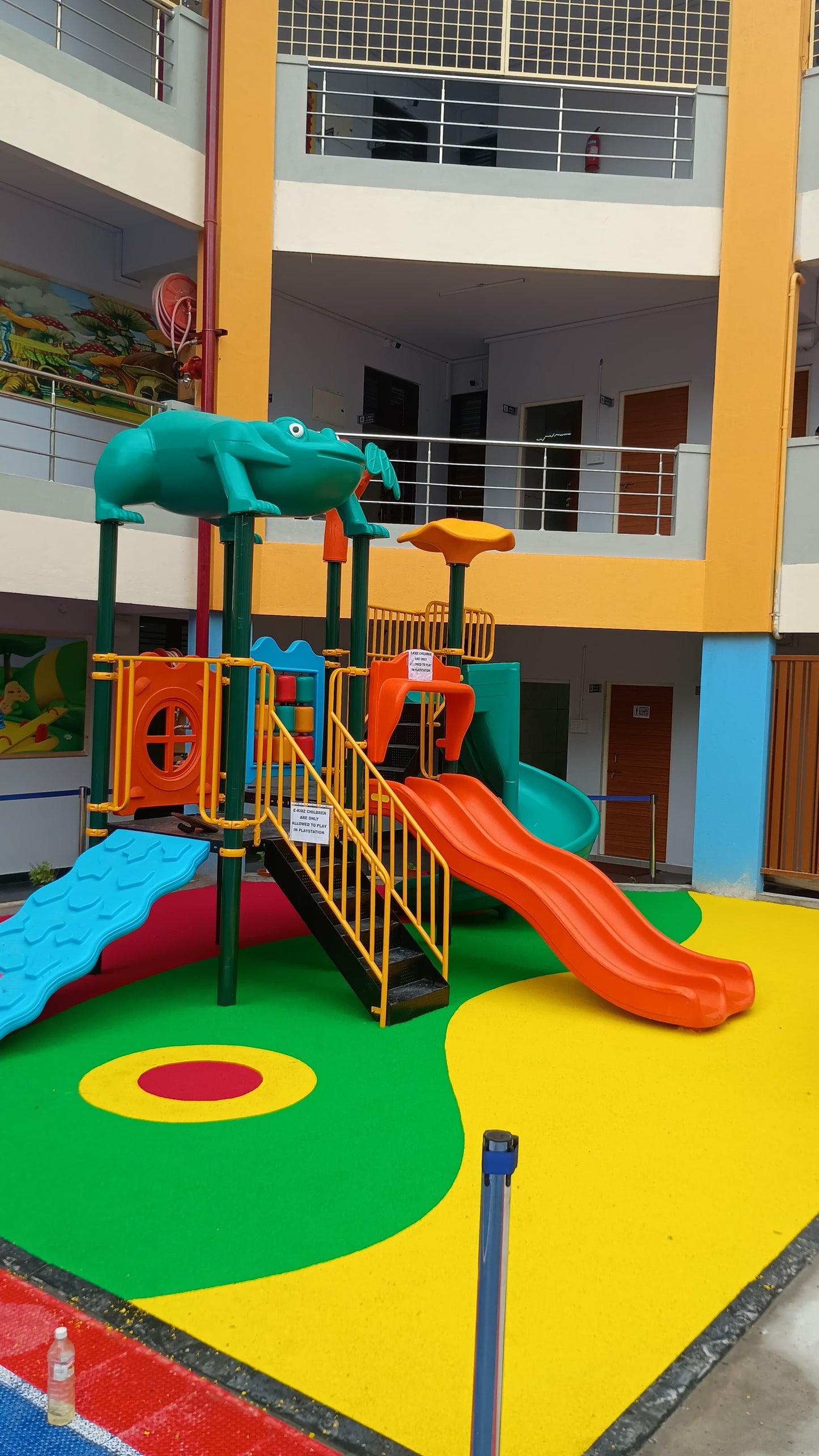

EPDM Playground Flooring: The Complete Guide for Schools & Parks in India
Choosing the right playground surface is one of the most consequential decisions a school, apartment complex, or public park makes — get it wrong and you're looking at injuries, drainage problems, and a resurfacing bill within a few years. EPDM (Ethylene Propylene Diene Monomer) rubber flooring has become the standard for a reason: it's the surface most likely to still look and perform well a decade from now.

What EPDM Actually Is
EPDM is a synthetic rubber, ground into granules and bound into a seamless mat with a polyurethane binder. Unlike loose rubber mulch or sand, it forms one continuous surface — no gaps for stones or debris to collect in, no shifting underfoot. It's the same base material used in premium roofing and automotive seals, chosen for the same reason: it holds up to years of UV exposure without cracking or fading.
Why It Beats the Alternatives
- Vs. sand or loose mulch: No raking, no topping up, no bugs breeding in damp material. EPDM stays level and clean with a hose-down.
- Vs. concrete or tile: Concrete offers zero impact absorption — a fall from playground equipment onto concrete is far more likely to cause serious injury than the same fall onto EPDM, which is engineered specifically to reduce impact force (critical height ratings apply here).
- Vs. artificial turf: Turf traps heat and can reach dangerously high surface temperatures in direct Indian summer sun. EPDM's granule structure dissipates heat better and doesn't require the same watering/cooling workarounds.
What Determines Thickness and Cost
EPDM isn't priced or specified as one uniform product — thickness is chosen based on the fall height of the tallest equipment on site. A toddler play area with low equipment needs less cushioning than a climbing structure with a 2-metre platform. Getting this specification right isn't optional if you want to meet safety standards; a supplier should ask about your equipment layout before quoting, not just square footage.
Colour and pattern also affect cost modestly — single-colour installations are the most economical, while multi-colour zoning (marking out different activity areas, hopscotch grids, running lanes) adds a small premium for the extra layering during installation.
Where EPDM Makes Sense
- School playgrounds and early-years play areas
- Apartment complex and gated community play zones
- Public parks and municipal recreation areas
- Gym flooring and fitness zones needing impact cushioning
- Splash pads and pool surrounds (slip resistance matters here too)
Maintenance Reality
This is where EPDM earns back its upfront cost. There's no annual reseeding, no sand replenishment, no re-levelling. A periodic hose-down and occasional check for surface debris is genuinely the extent of the maintenance routine. Over a 10+ year lifespan, that adds up to a meaningfully lower total cost of ownership than surfaces that need yearly intervention.
Planning a playground or play area?
Share your area dimensions and equipment layout — we'll recommend the right thickness and send a quote, usually the same day. See our EPDM Rubber Flooring product for specifications.