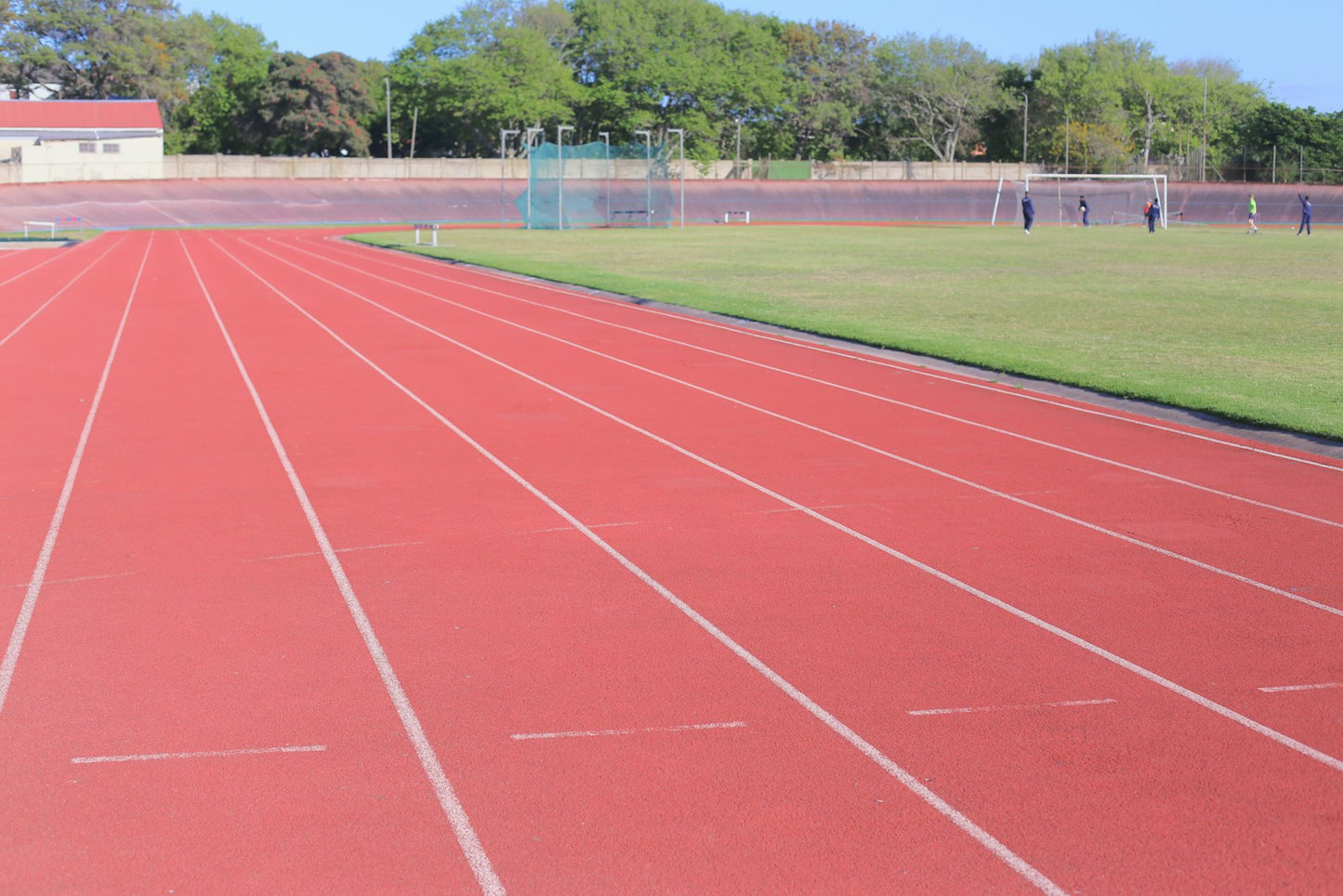

Running Track Construction Guide: Systems, Sizing & Cost for Schools & Stadiums
Every school or municipal body planning a running track faces the same question early on: what actually goes into the surface, and why does the price range so widely between vendors? The answer is layers — a synthetic track isn't one material, it's a system, and the system you choose determines both what it costs and how long it lasts.

The Two Common System Types
Full-depth (sandwich) systems use a thicker, uniform rubber granule mix bonded with polyurethane binder throughout. These are more durable under heavy daily use and are the standard choice for competition tracks and high-traffic school facilities.
Structural spray-coat systems use a thinner rubber base with a spray-applied top coat. They cost less upfront and work well for lower-traffic training tracks, but generally need resurfacing sooner under heavy use.
The right choice depends on expected usage — a school track used daily by hundreds of students needs different specification than a municipal track used mainly for weekend events.
What the Layers Actually Do
- Base/sub-base: Asphalt or concrete foundation — this has to be right before anything else matters. A poor sub-base undermines even the best surface layer.
- Cushion layer: Rubber granules that absorb impact and return energy, reducing joint strain on runners over repeated training sessions.
- Spray coat / wear layer: The top surface that provides grip, UV resistance, and the track's final colour and texture.
- Lane markings: Precision-applied and measured to standard specifications for training and competition use.
Sizing and Layout Basics
A standard competition oval is 400m, but school and training facilities often work with shorter or non-standard configurations depending on available land. What matters most for a school build is getting lane count and width right for your actual student population — a track that's too narrow for simultaneous class use during PE periods creates its own problems regardless of surface quality.
What Drives the Budget
Three factors move the number more than anything else: total track area, system type (full-depth vs. spray-coat), and site preparation — if the existing ground needs significant grading or a new asphalt sub-base, that's often a larger cost than the track surface itself. Any quote that doesn't ask about your current ground condition before pricing isn't a complete quote.
Maintenance and Lifespan
A properly installed synthetic track, maintained with routine cleaning and periodic inspection, typically holds up well for 8–10+ years before resurfacing is needed. UV-stable coatings matter here — tracks exposed to intense sun year-round (as most of India is) need coatings rated for that exposure, or colour fade and surface degradation happen much faster than expected.
Planning a running track?
Share your available land dimensions and lane count — we'll recommend the right system and send a material estimate, usually the same day. See our Running Track Surfaces product for specifications.