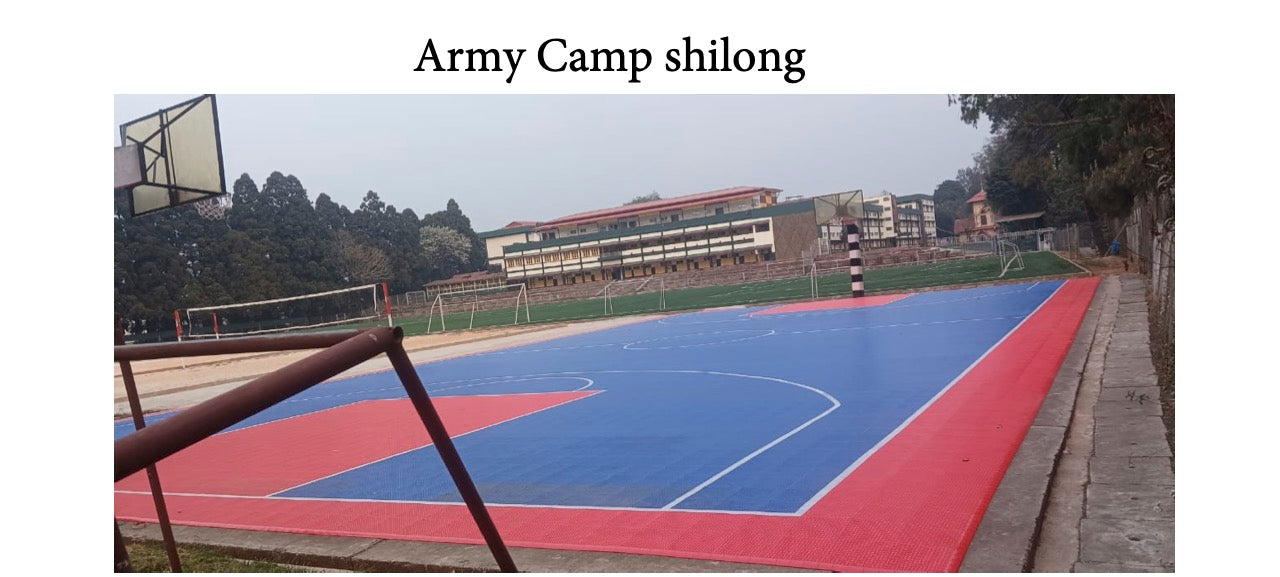

PP Interlocking Sports Tiles: The Smart Choice for Modern Athletic Facilities
Share
India's sports infrastructure is evolving rapidly. From school gymnasiums to professional training centers, facility managers are rethinking their flooring decisions—prioritizing safety, durability, and long-term value. PP interlocking sports tiles have emerged as one of the most practical solutions for indoor and outdoor athletic surfaces, offering a compelling alternative to traditional flooring systems.
At Bharat Natural, we supply high-quality PP interlocking tiles designed for multi-sport applications. This guide explores why these tiles are gaining traction, how they compare to other options, and what to consider when upgrading your facility.
What Are PP Interlocking Sports Tiles?
PP (polypropylene) interlocking tiles are modular flooring units that snap together without adhesives or specialized installation. Each tile features a grid pattern with small perforations that allow water drainage, air circulation, and surface flexibility.
Key characteristics include:
- Modular design — tiles connect via interlocking edges, enabling fast installation and easy replacement of damaged sections
- Shock absorption — the suspended grid structure reduces impact on joints and muscles
- Weather resistance — UV-stabilized polypropylene withstands sun exposure, rain, and temperature fluctuations
- Multi-sport compatibility — suitable for basketball, badminton, futsal, tennis, volleyball, and recreational play
Unlike poured surfaces or permanent hardwood systems, PP tiles can be installed over existing concrete, asphalt, or compacted ground with minimal site preparation.
Why Sports Flooring Decisions Matter More Than Ever
The global sports flooring market is projected to reach USD 4.3 billion by 2036, growing at a steady 3.3% CAGR. Fact.MR India and China are leading this growth, with India's market expanding at approximately 4.4% annually—among the fastest rates globally.
Several factors are driving this expansion:
1. Rising Investment in Indoor Sports Infrastructure
Government programs and private developers are building more gymnasiums, community recreation centers, and multi-purpose sports halls. Schools and municipal bodies are upgrading facilities to meet safety compliance standards and accommodate growing participation in organized sports.
2. Athlete Safety as a Priority
Approximately 36% of sports facilities experience flooring wear issues within the first five years of installation in high-traffic areas. Business Research Insights Poor flooring contributes to joint stress, slip injuries, and long-term musculoskeletal problems. Facility operators increasingly recognize that the right surface reduces injury risk and improves athletic performance.
3. Sustainability and Environmental Compliance
Over 52% of newly developed sports flooring products in 2025 incorporated recycled rubber, recyclable PVC, or eco-friendly composite materials. Business Research Insights Regulatory pressure to reduce volatile organic compound (VOC) emissions and improve recyclability is reshaping procurement decisions.
4. Demand for Multi-Functional Spaces
Fitness centers, schools, and community halls want surfaces that support multiple activities without frequent replacement. Around 46% of premium fitness centers have invested in flooring systems with anti-slip, acoustic, and impact-resistant features.
Common Gaps in Sports Flooring Decisions
Despite increased awareness, many facility managers face challenges when selecting athletic surfaces:
Installation Quality Issues
Nearly 24% of flooring defects reported in 2025 were linked to improper installation or subfloor preparation. Business Research Insights Complex systems requiring adhesives, specialized substructures, or professional contractors introduce more points of failure.
How PP tiles address this: Interlocking installation requires no glue, nails, or specialized labor. Tiles can be laid directly over flat surfaces, reducing installation errors and enabling in-house maintenance teams to handle replacements.
High Lifecycle Costs
Traditional wooden flooring—still accounting for 34–47% of installations depending on market segment—requires regular sanding, refinishing, and climate control. Moisture damage, warping, and pest infestation add to maintenance burdens.
How PP tiles address this: Polypropylene is inherently moisture-resistant and impervious to termites. Damaged tiles can be individually replaced rather than resurfacing entire floors, significantly reducing lifecycle maintenance costs.
Limited Outdoor Viability
Wooden and many synthetic surfaces degrade quickly when exposed to rain, direct sunlight, or temperature extremes. This limits their use for outdoor courts, rooftop facilities, or semi-covered areas.
How PP tiles address this: UV-stabilized PP tiles are designed for outdoor use. The perforated design prevents water pooling, and the material remains dimensionally stable across temperature ranges typical of Indian climates.
Difficulty Matching Surface to Sport
Different sports require different ball bounce characteristics, surface friction, and shock absorption levels. A surface optimized for basketball may not suit badminton or futsal.
How PP tiles address this: Reputable manufacturers offer sport-specific tile variants with calibrated surface textures and resilience ratings. Modular systems also allow zoning—different tiles for different court areas—within a single facility.
Comparing PP Interlocking Tiles to Other Options
| Feature | PP Interlocking Tiles | Wooden Flooring | PVC Sports Flooring |
|---|---|---|---|
| Installation time | Hours to days | Days to weeks | Days to weeks |
| Adhesive required | No | Yes | Yes |
| Outdoor suitability | Excellent | Poor | Limited |
| Moisture resistance | Excellent | Poor | Moderate |
| Maintenance | Low | High | Moderate |
| Replaceability | Individual tiles | Full refinish | Section replacement |
| Upfront cost | Low to moderate | High | Moderate |
| Shock absorption | Good | Excellent | Good to excellent |
| Customization | Color options, sport-specific variants | Limited | Color options |
Wooden flooring remains the gold standard for professional basketball and volleyball venues where performance requirements justify the investment and maintenance overhead. However, for schools, community centers, recreational facilities, and outdoor courts, PP interlocking tiles offer a more practical balance of performance, durability, and cost.
Key Trends Shaping Athletic Surface Choices
Sustainability Requirements Are Tightening
About 42% of flooring manufacturers faced pressure to reduce VOC emissions from synthetic materials in 2024–2025. Business Research Insights Facilities seeking green building certifications or government contracts increasingly require environmental compliance documentation.
PP tiles manufactured from recyclable polypropylene can support these requirements. When selecting a supplier, ask for material safety data sheets and recyclability certifications.
Technology Integration in Flooring
Over 42% of new flooring product launches in 2024–2025 featured enhanced shock absorption technology, while 31% included moisture-resistant coatings. Business Research Insights The trend toward engineering surfaces for specific performance outcomes—rather than treating flooring as a commodity—continues to accelerate.
Multi-Purpose Facility Design
The economics of sports infrastructure increasingly favor flexible spaces. A school gymnasium might host basketball practice, yoga sessions, and community events within the same week. Surfaces that accommodate this variety without damage or performance compromise are in demand.
How to Evaluate PP Interlocking Tiles for Your Facility
1. Assess Your Primary Use Cases
List the sports and activities your facility will host, ranked by frequency. Ensure the tile specifications—surface texture, ball bounce ratings, shock absorption—match your dominant use cases.
2. Evaluate the Subfloor Condition
While PP tiles are forgiving, the underlying surface should be reasonably flat and stable. Significant cracks, slopes, or drainage issues should be addressed before installation.
3. Request Technical Specifications
Quality varies significantly across manufacturers. Ask for:
- ASTM or equivalent shock absorption ratings
- UV stabilization details for outdoor applications
- Load-bearing capacity
- Warranty terms and conditions
4. Consider Climate and Exposure
For outdoor or semi-covered installations in hot climates, verify that tiles are rated for high UV exposure and wide temperature ranges. Dark-colored tiles may absorb more heat—consider lighter colors for barefoot or low-footwear activities.
5. Plan for Future Modifications
One advantage of modular systems is adaptability. If you anticipate changing court layouts, adding facilities, or relocating, factor in the ease of disassembly and reinstallation.
For sport-specific construction details, see our dedicated guides: Basketball Court Flooring, Badminton Court Flooring, and Pickleball Court Flooring.
Why Choose Bharat Natural for PP Interlocking Sports Tiles?
At Bharat Natural, we supply PP interlocking tiles engineered for Indian conditions—designed to withstand monsoon moisture, intense summer heat, and heavy daily use. Our tiles are suitable for:
- School and university sports facilities
- Community recreation centers
- Fitness centers and gyms
- Outdoor basketball and futsal courts
- Residential sports areas
- Corporate wellness zones
We provide technical consultation to help you match tile specifications to your facility's requirements, along with installation guidance and after-sales support.
Frequently Asked Questions
How long do PP interlocking sports tiles last?
With normal use and basic maintenance, quality PP tiles last 8–15 years. Outdoor installations may have shorter lifespans depending on UV exposure and climate conditions.
Can PP tiles be installed over existing flooring?
Yes, provided the existing surface is flat, stable, and free of major cracks or moisture issues. Tiles can be laid over concrete, asphalt, or compacted ground.
Are PP tiles suitable for professional competitions?
PP interlocking tiles meet requirements for recreational and school-level competition. Professional venues with specific federation requirements may need to verify compliance with sport-specific certifications.
How do I clean and maintain PP sports tiles?
Regular sweeping and occasional mopping with mild detergent are sufficient. The perforated design allows debris to fall through, reducing surface accumulation. Avoid harsh chemicals that may degrade the polypropylene.
Can damaged tiles be replaced individually?
Yes—this is a primary advantage of modular systems. Individual tiles can be unsnapped and replaced without affecting surrounding sections.
Ready to Upgrade Your Sports Facility?
Choosing the right athletic surface is an investment in safety, performance, and long-term operating costs. PP interlocking sports tiles offer a compelling option for facilities seeking durability, easy maintenance, and multi-sport versatility.
Contact Bharat Natural today to discuss your project requirements, request samples, or schedule a consultation.
Please email us at sales@bharatnatural.co or bharatnatural.co@gmail.com or Visit www.bharatnatural.co to explore our range of sports flooring solutions.